Hospitality Furniture for the Australian Climate: UV, Coastal Corrosion and Heat (2026)
How to specify cafe, pub and beer garden furniture that survives Australian UV, salt air, humidity and heat: frames, coatings, fixings, fabrics and timber compared.
Short answer
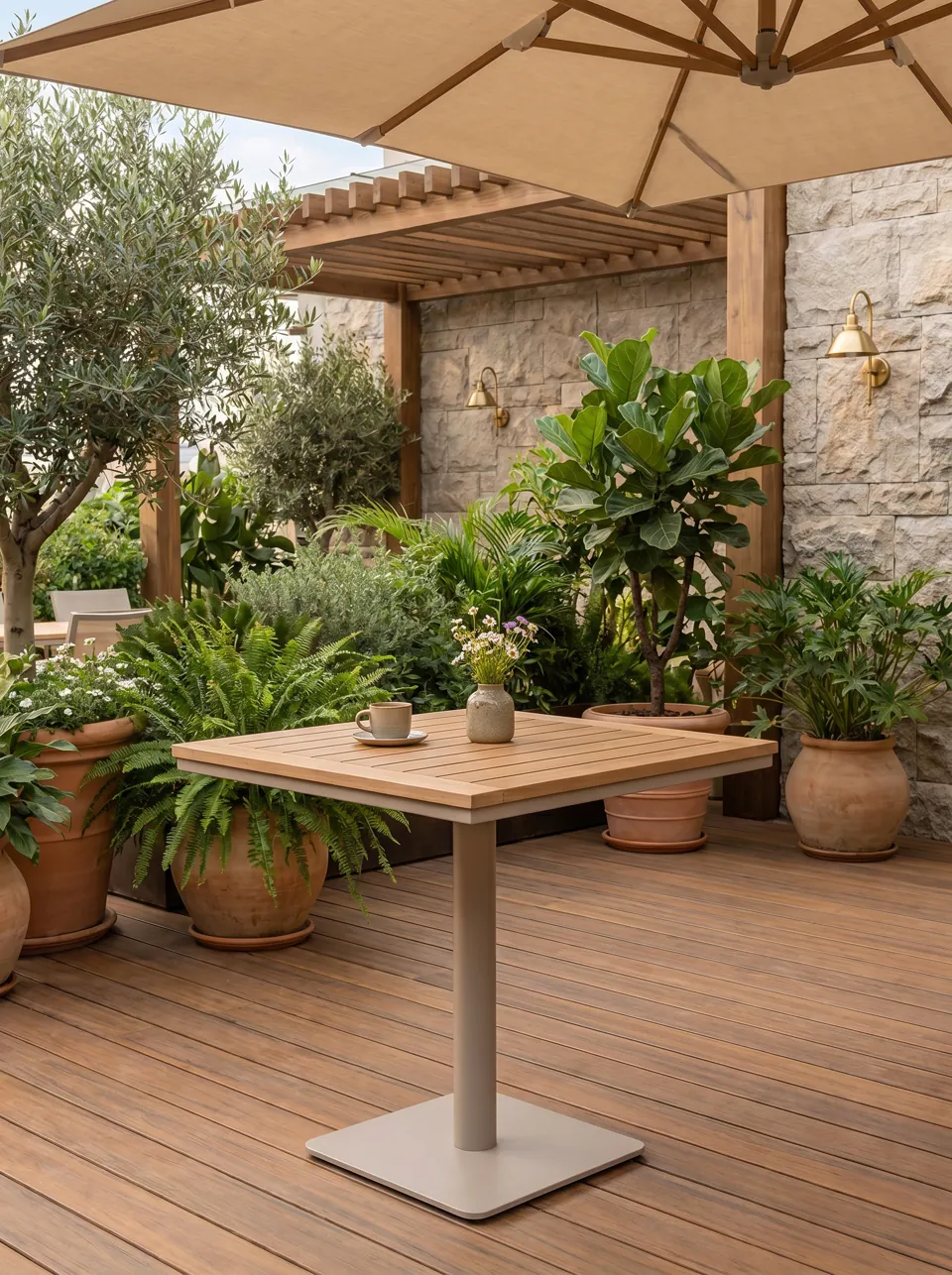
Australian conditions are harder on furniture than most of the places it is designed for. For outdoor and semi-outdoor areas, specify powder-coated aluminium frames (not mild steel), solution-dyed weaves and fabrics, stainless fixings (316 grade near the surf) and weather-rated table tops. Match the coating system to your site's corrosion exposure, plan for heat and storms, and keep natural cane, standard fabrics and indoor timber finishes out of direct sun.
Venue Fitout (a line by EASEN Commercial Furniture) supplies cafes, pubs and restaurants across Australia and New Zealand. This guide sets out what the climate does to hospitality furniture and how to specify against it.
What makes Australia hard on furniture?
Four things, often at the same venue:
- High UV. Australia regularly records UV Index readings in the "extreme" band (11+) in summer, and UV is significant for much of the year even in the southern cities. UV fades pigments, chalks coatings and embrittles plastics.
- Salt air. A large share of the population, and of hospitality venues, sits close to the coast. Airborne salt attacks steel, low-grade stainless and poorly prepared coatings.
- Heat and humidity swings. From dry 40 °C days in Perth and Adelaide to tropical humidity in Darwin and Cairns. Timber moves, glues are stressed and dark surfaces get very hot.
- Storms and wind. Summer storms, coastal winds and, in northern regions, cyclone seasons turn light furniture into hazards.
Know your corrosion exposure
AS 4312 classifies atmospheric corrosivity across Australia into categories from C1 (very low) to C5 (very high), plus CX (extreme), aligned with the ISO 9223 approach. In broad terms, exposure rises sharply close to breaking surf and in industrial areas, and falls quickly as you move inland and behind buildings.
| Site type | Typical exposure | Frame spec | Fixings | Care |
|---|---|---|---|---|
| Indoor, air-conditioned | Very low | Any commercial finish | Standard | Routine cleaning |
| Covered courtyard, inland suburb | Low to medium | Powder-coated aluminium or steel | 304 stainless | Wipe down monthly |
| Open beer garden, inland | Medium | Powder-coated aluminium | 304 stainless | Rinse periodically |
| Within a few km of calm salt water | Medium to high | Aluminium, upgraded coating | 316 stainless | Fresh-water rinse every few weeks |
| Beachfront, near breaking surf | High to very high | Aluminium, marine-grade coating system | 316 stainless, isolated from aluminium | Fresh-water rinse weekly to fortnightly |
Use this table as a starting point and check your site with the coating supplier. Many powder-coat suppliers set reduced warranty terms or additional maintenance conditions for sites close to breaking surf, so ask what applies at your address before you choose a colour.
Frame materials for Australian conditions
| Frame | Rust | Heat | Weight | Verdict |
|---|---|---|---|---|
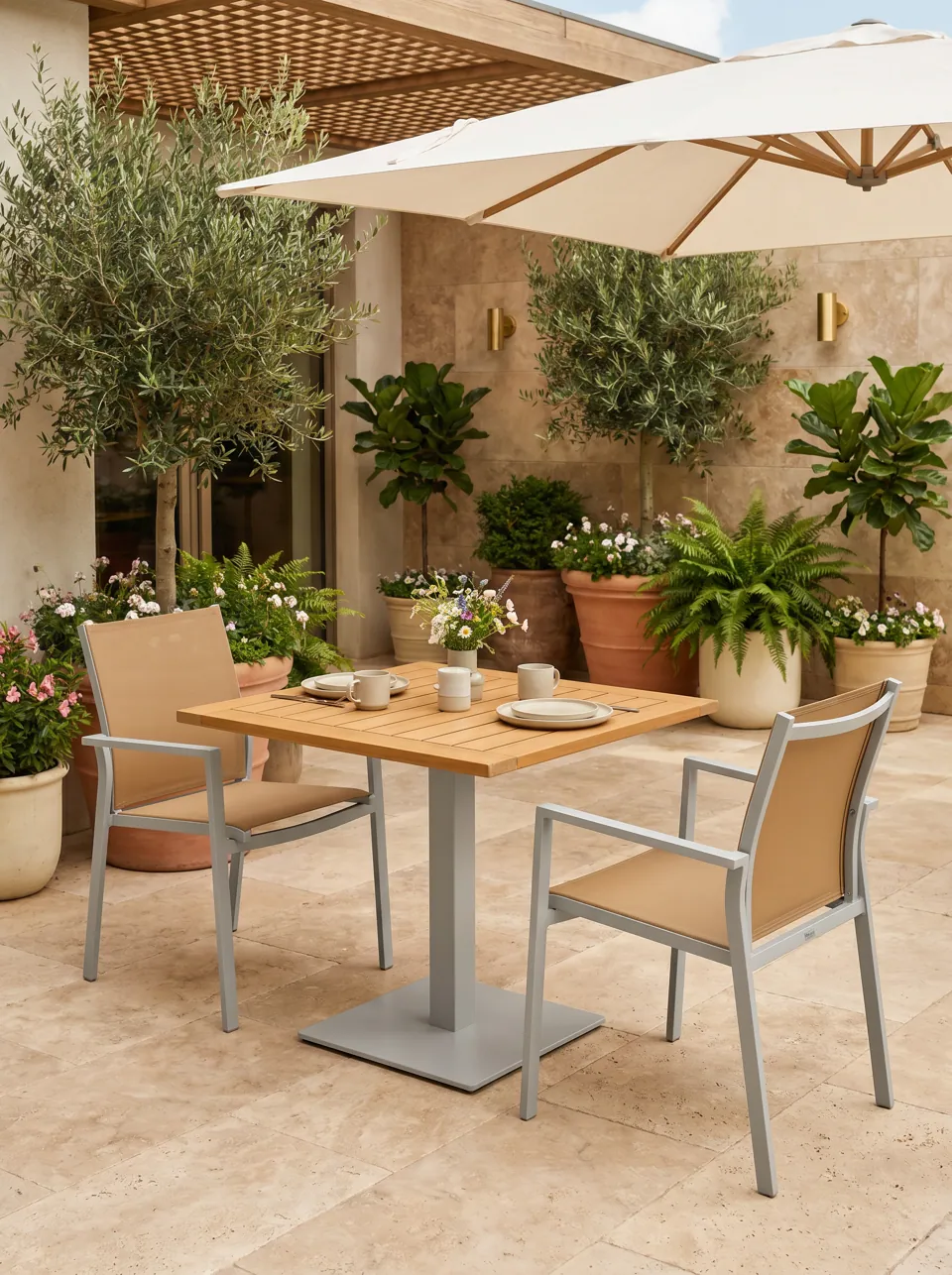
| Powder-coated aluminium | Does not rust | Gets warm, light colours stay cooler | Light | Best default outdoors |
| Powder-coated mild steel | Rusts at any chip | Hot in sun | Heavy | Indoor or fully covered only |
| Galvanised + powder-coated steel | Much better than plain steel | Hot | Heavy | Exposed, windy sites needing weight |
| 304 stainless | Can tea-stain near the coast | Hot | Heavy | Inland outdoor |
| 316 stainless | Better chloride resistance | Hot | Heavy | Coastal hardware and frames |
| Hardwood (teak and similar) | n/a | Stays comfortable | Medium | Needs oiling or accepts silvering |
| Moulded resin | n/a | Moderate | Very light | Beer gardens, overflow |
Aluminium's advantage is simple: when the coating is chipped, it oxidises rather than rusting and bleeding orange onto pavers. For architectural aluminium coatings, AS 3715 is the Australian standard commonly referenced for thermoset powder coatings; ask your supplier which coating system and pretreatment are used, and whether a higher-performance (for example fluoropolymer) system is available for coastal sites.
Our outdoor range, including the Kingsland Mesh Armchair and Cottesloe White Weave Chair, uses aluminium frames for this reason.
Fixings: the small parts that fail first
- Zinc-plated screws rust within a season outdoors and stain everything below.
- 304 stainless suits inland outdoor furniture.
- 316 stainless, which contains molybdenum, gives better resistance to chloride pitting and is the sensible choice for coastal venues and pool areas.
- Isolate stainless from aluminium with nylon washers or sleeves to reduce galvanic corrosion in salty, wet conditions.
Weaves, fabrics and UV
| Material | UV behaviour | Notes for Australia |
|---|---|---|
| Natural cane / rattan | Dries out, fades, can split in direct sun | Indoor or deep shade only |
| Synthetic weave (HDPE) | Good when solution-dyed | Best synthetic choice outdoors |
| Synthetic weave (PVC) | Can embrittle | Avoid for full sun |
| Textilene mesh | Good | Dries fastest; ideal for beer gardens |
| Solution-dyed acrylic fabric | Excellent fade resistance | Premium outdoor cushions |
| Standard upholstery fabric | Fades quickly in sun | Keep out of direct sunlight, even indoors |
| Commercial vinyl | Moderate; can harden over time in sun | Choose UV-stabilised grades for sunny positions |
Indoors, UV still matters. Banquettes along north-facing glazing, the sunny side in both Australia and New Zealand, can fade noticeably within a year. Ask for lightfastness data on fabrics for window seats, or choose mid-tone colours that hide gradual fading. Cane-backed chairs like the Fitzroy Cane Bentwood Chair belong in the dining room, not on the footpath.
Heat
- Dark metal and dark vinyl seats in full sun can become uncomfortably hot. Choose lighter colours, mesh or weave seats, or shade.
- Composite and resin parts can soften and distort if left against very hot surfaces or near heaters; follow heater clearance guidance.
- Timber moves with humidity. In tropical venues, choose stable species, well-sealed finishes and joints designed for movement.
Wind and storms
- Prefer chairs with open backs (mesh, weave, slats) for exposed sites.
- Stack and secure chairs and close umbrellas before forecast storms.
- In cyclone-prone regions, outdoor furniture should be removed or secured as part of the venue's storm plan; loose furniture can become windborne debris. Follow your local council and state emergency guidance.
- Weighted bases matched to table size stop tables tipping in gusts.
Specification checklist
- [ ] Each area classified: indoor, covered, open, coastal
- [ ] Frame material chosen per area (aluminium outdoors)
- [ ] Coating system and pretreatment confirmed; coastal upgrade where needed
- [ ] Fixing grade specified (304 inland, 316 coastal)
- [ ] Weaves and fabrics solution-dyed for outdoor positions
- [ ] Lightfastness checked for window seating
- [ ] Table tops rated for outdoor use
- [ ] Storm, cyclone and pack-down plan agreed
- [ ] Care instructions included in staff training
Common mistakes
- Using indoor chairs outdoors "just under the awning". Rain blows in and UV reflects off pavement.
- Mild steel at the beach. Rust stains on pavers within months.
- Natural cane in the sun. It dries, fades and splits.
- Assuming stainless never stains. 304 can tea-stain near the coast; 316 and regular rinsing help.
- Dark seats with no shade. Guests will not sit on them at 2 pm in January.
- No rinse routine. Salt left on coatings shortens their life; a fresh-water rinse is cheap maintenance.
For outdoor pieces built for these conditions, see our beer garden and outdoor collection.
FAQ
What is the best outdoor furniture material for coastal Australia?
Powder-coated aluminium frames with a coating system suited to your exposure, 316 stainless fixings, solution-dyed synthetic weaves or textilene, and weather-rated tops. Rinse with fresh water regularly to remove salt.
Does aluminium outdoor furniture rust near the beach?
Aluminium does not form red rust. Poorly prepared coatings can still corrode underneath at chips and edges, so the pretreatment and coating system, plus regular rinsing, matter a great deal near the surf.
Can natural rattan or cane furniture be used outdoors in Australia?
Not in direct sun or rain. Natural cane dries, fades and can split. Use synthetic HDPE weave outdoors and keep natural cane for indoor or deeply shaded areas.
How often should coastal outdoor furniture be cleaned?
Near breaking surf, a fresh-water rinse every week or two is a good routine, with a mild detergent wash periodically. Inland, a rinse every month or so is usually enough.
What should we do with outdoor furniture before a storm or cyclone?
Stack and bring chairs inside or secure them, close and remove umbrellas, and store cushions. In cyclone-prone areas, follow your venue's emergency plan and state guidance on securing loose items.
Send us your floor plan, seat targets and opening date. We will reply with a furniture selection, metric specifications and a container-direct quote.
Request a quote